Historical figure · History of Russia · 17th century
Protopop Avvakum
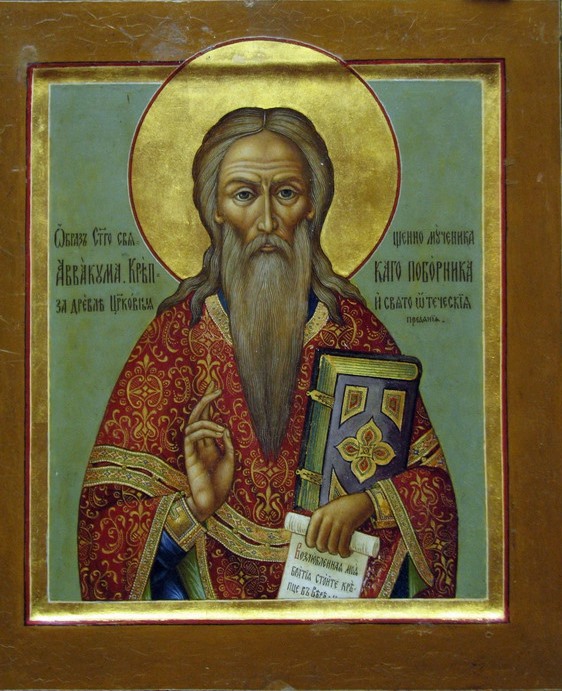
✍️ Archpriest Avvakum Petrov became the spiritual leader and chief ideologist of the resistance to Patriarch Nikon's church reform, a symbol of steadfastness and unyielding devotion to defending the old Orthodox tradition. A committed supporter of preserving pre-reform rituals, he categorically refused to accept the innovations of the 1650s, considering the correction of liturgical books according to Greek models a betrayal of the true faith and a destruction of the spiritual heritage of his ancestors. His unbending stance quickly made him a central figure in the emerging Old Believer movement.
⛓️ For his open resistance to the reforms, Avvakum endured years of persecution: he was repeatedly exiled to remote and harsh regions of the empire, including Siberia and Dauria, where he and his family endured extreme hardship, hunger, and illness. Despite his suffering, the archpriest never abandoned his convictions, continuing to preach loyalty to the old rites and denouncing the church authorities in letters and epistles that were secretly circulated among supporters of the old faith throughout the country.
📖 It was in captivity that Avvakum created his major literary works, the most famous being his autobiographical "Life of Archpriest Avvakum, Written by Himself" — a unique monument of Russian literature, written in vivid, emotional language close to the spoken word. In this work he described in detail the suffering he had endured, set out his religious convictions, and presented the image of an unbending fighter for the faith, making the text not only a religious document but also an outstanding literary monument of the era. Besides the "Life," Avvakum authored numerous epistles and polemical writings directed against the church reforms.
🔥 After the Great Moscow Council of 1666–1667, which officially confirmed the reforms and condemned supporters of the old rites, Avvakum was stripped of his rank, anathematized, and exiled to Pustozersk, where he spent the last fifteen years of his life in an underground prison. Even in these inhuman conditions, he continued to write and spiritually guide his followers, refusing any compromise with the official church. In 1682, by decree of Tsar Fyodor Alekseevich, Avvakum and his companions were burned alive in a log structure for "great blasphemies against the royal house," turning the archpriest into a martyr and one of the most venerated figures in the Old Believer tradition.
Key dates
- 1653 — Avvakum begins open resistance to Nikon's church reform
- 1653 — Avvakum's first exile to Siberia
- 1650s — stay in Dauria together with his family
- 1664 — Avvakum returns to Moscow after Nikon's removal
- 1664 — Avvakum exiled again to the north of the country
- 1666-1667 — Great Moscow Council strips Avvakum of his rank and anathematizes him
- 1667 — Avvakum exiled to Pustozersk
- 1667-1682 — writing of the "Life of Archpriest Avvakum" and other works in captivity
- 1670s — writing of numerous epistles to supporters of the old faith
- 1682 — Avvakum burned at the stake in Pustozersk by decree of Tsar Fyodor Alekseevich