Historical figure · History of Russia · 17th century
Aleksey Mikhailovich (the Highest Peaceful)
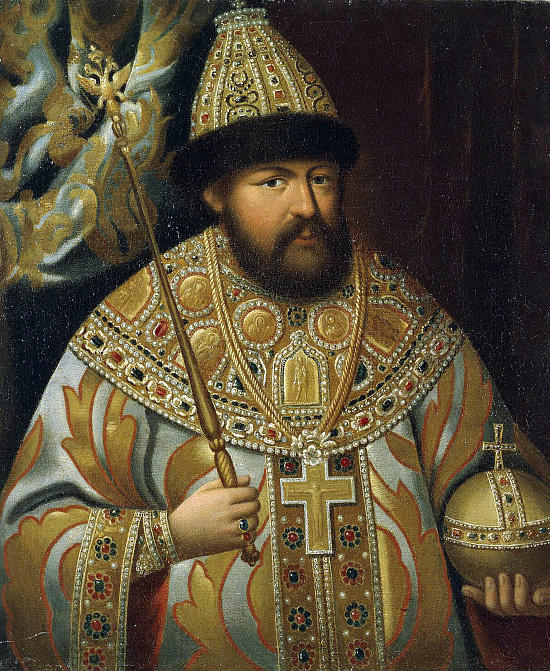
👑 Alexei Mikhailovich, nicknamed "the Quietest," ruled Russia from 1645 to 1676 and became one of the most significant monarchs of the seventeenth century. Ascending the throne at the age of sixteen, he continued his father's work of strengthening autocratic power and centralizing state administration. Despite his nickname, his reign was marked by sweeping reforms, wars, and popular uprisings, making the tsar's image far more complex than his quiet epithet suggests.
📜 The most important event of his reign was the adoption in 1649 of the Sobornoye Ulozheniye, a law code that finally formalized serfdom by abolishing the statute of limitations on serf recovery and cemented the estate-based structure of society. This document systematized judicial and administrative practice, regulated the rights and obligations of various social estates, and remained Russia's primary legal code until the early nineteenth century. The Ulozheniye was a response to the Salt Riot of 1648 and an attempt to stabilize the state through clear legal regulation.
⚔️ Alexei Mikhailovich's foreign policy was filled with military conflicts: the prolonged war with the Polish-Lithuanian Commonwealth over Ukraine ended with the Truce of Andrusovo in 1667, which secured Smolensk and Left-bank Ukraine, including Kiev, for Russia. A crucial geopolitical achievement was the reunification with Left-bank Ukraine following the Pereyaslav Council of 1654, when Hetman Bogdan Khmelnitsky swore allegiance to the Moscow tsar. At the same time, Russia fought a war against Sweden, while in the south the country faced the threat posed by the Crimean Khanate.
☦️ A significant event was Patriarch Nikon's church reform, initiated with the tsar's support and aimed at unifying rituals with the Greek Orthodox tradition, which led to a schism in the Russian church and the emergence of the Old Believers. Alexei Mikhailovich's reign was also marked by large-scale popular uprisings — the Copper Riot of 1662 and Stepan Razin's rebellion of 1670–1671, which resulted from the heavy tax burden and social tension. As a person, the tsar was known for his piety, love of order and ceremony, yet he also showed keen interest in European innovations, which later influenced the reformist ambitions of his son, Peter the Great.
Key dates
- 1645 — Alexei Mikhailovich ascends the throne
- 1648 — Salt Riot in Moscow
- 1649 — adoption of the Sobornoye Ulozheniye law code
- 1654 — Pereyaslav Council and reunification with Left-bank Ukraine
- 1654-1667 — war with the Polish-Lithuanian Commonwealth over Ukraine
- 1656-1658 — war with Sweden
- 1662 — Copper Riot in Moscow
- 1667 — Truce of Andrusovo with the Polish-Lithuanian Commonwealth
- 1666-1667 — church council confirming Patriarch Nikon's reforms and the schism
- 1670-1671 — Stepan Razin's rebellion